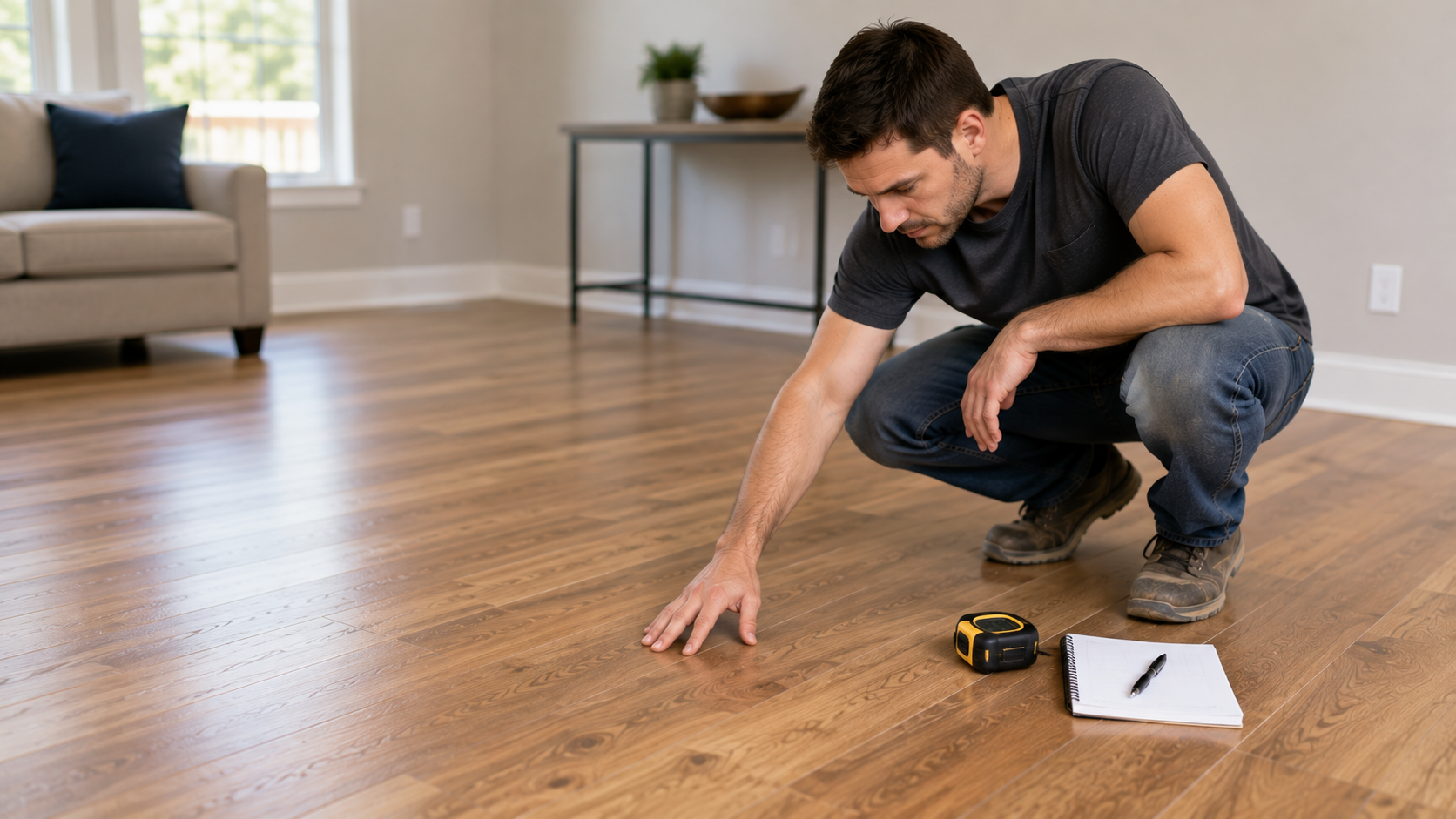
Flooring inspections help determine whether an installation meets applicable industry requirements for quality, performance, safety, and durability. However, evaluating a flooring installation involves more than simply identifying visible defects. Inspectors must also understand the technical standards that establish acceptable installation practices, material performance, testing procedures, and tolerances.
Two important organizations that flooring inspectors frequently encounter are ASTM International and the American National Standards Institute (ANSI). Although both contribute to industry standardization, they serve different purposes and provide different types of guidance.
Professional flooring inspections also rely on specialized standards, including ANSI/IICRC S220 and ANSI/IICRC S800, which provide guidelines for inspecting hard-surface and textile floor coverings, respectively.
Understanding the differences between ASTM and ANSI standards helps flooring inspectors conduct more accurate evaluations, support their findings with reliable technical references, and communicate inspection results more effectively.
What Are ASTM Standards?
ASTM International, formerly known as the American Society for Testing and Materials, is a globally recognized organization that develops voluntary consensus standards for materials, products, systems, and services.
In the flooring industry, ASTM standards establish standardized methods for testing flooring materials, evaluating surface performance, measuring physical properties, and assessing installation-related conditions.
These standards help ensure that flooring products and installation systems are evaluated using consistent and repeatable procedures.
Common ASTM Standards Used in Flooring Inspections
Some ASTM standards relevant to flooring evaluation include:
- ASTM F710: Standard Practice for Preparing Concrete Floors to Receive Resilient Flooring. It addresses important considerations such as concrete subfloor preparation, moisture testing, and surface conditions.
- ASTM F2170: Standard Test Method for Determining Relative Humidity in Concrete Floor Slabs Using in-situ Probes. It helps evaluate moisture conditions within concrete slabs.
- ASTM F1869: Standard Test Method for Measuring Moisture Vapor Emission Rate of Concrete Subfloor Using Anhydrous Calcium Chloride.
- ASTM F1482: Standard Practice for Installation and Preparation of Panel Type Underlayments to Receive Resilient Flooring. It provides guidance on preparing and installing panel-type underlayments before resilient flooring installation.
- ASTM E492: Standard Test Method for Laboratory Measurement of Impact Sound Transmission Through Floor-Ceiling Assemblies Using the Tapping Machine. It evaluates impact sound transmission under laboratory conditions, rather than through on-site field testing.
These standards provide inspectors with recognized procedures for evaluating specific flooring-related conditions.
ASTM also has technical committees dedicated to flooring materials and related industry requirements. ASTM Committee F06 focuses on resilient floor coverings. IFCII’s leadership also has experience participating in ASTM technical committees, including Committee F06, which focuses on resilient floor coverings.
What Are ANSI Standards?
The American National Standards Institute (ANSI) is a private, nonprofit organization that oversees and coordinates the development of voluntary consensus standards in the United States.
Unlike ASTM, which develops technical standards through expert committees, ANSI generally does not develop standards itself. Instead, it accredits standards-developing organizations and approves qualifying standards as American National Standards through a consensus-based process.
In the flooring industry, ANSI-approved standards cover areas such as product specifications, installation requirements, material performance, and testing procedures. These standards help flooring inspectors evaluate whether products and installation practices meet recognized industry requirements.
Common ANSI Standards Used in Flooring Inspections
Several ANSI standards and ANSI-accredited standards are relevant to flooring materials and installations.
- ANSI A108 Series: Covers specifications for ceramic tile installation, including installation methods and workmanship requirements.
- ANSI A118 Series: Covers specifications and test requirements for ceramic tile installation materials, including mortars, grouts, and waterproofing-related products.
- ANSI A136.1: Establishes requirements for organic adhesives used in ceramic tile installation.
- ANSI A137.1: Establishes product specifications and performance requirements for ceramic tile, including relevant classifications and physical characteristics.
- ANSI A326.3: Provides a standardized test method for measuring the dynamic coefficient of friction (DCOF) of hard-surface flooring materials under specified testing conditions.
These standards help inspectors evaluate whether flooring products and installation practices align with recognized industry requirements.
Get to Know the Essential Tools Used by Flooring Inspectors
ANSI/IICRC Standards for Professional Flooring Inspections
In addition to ASTM flooring standards and other ANSI-approved technical requirements, professional flooring inspectors rely on specific standards developed for inspecting different types of floor coverings.
Two important standards are ANSI/IICRC S220 and ANSI/IICRC S800. These standards provide professional guidelines for evaluating flooring conditions, identifying deficiencies, documenting findings, and preparing inspection reports.
ANSI/IICRC S220
ANSI/IICRC S220 provides professional guidelines for inspecting hard-surface floor coverings. It helps inspectors evaluate flooring conditions, identify deficiencies, investigate installation-related concerns, and document their observations.
The standard supports a structured approach to professional flooring inspections and reporting, helping inspectors communicate their findings objectively.
ANSI/IICRC S800
ANSI/IICRC S800 provides professional guidelines for inspecting textile floor coverings, including carpet. It helps inspectors evaluate carpet conditions, identify potential deficiencies, document observations, and prepare professional inspection reports.
Following recognized inspection procedures helps professionals communicate carpet-related findings clearly and consistently.
IFCII’s Experience in Developing Flooring Inspection Standards
IFCII’s leadership brings firsthand experience in developing professional flooring inspection standards. Our leadership personally served on the committees responsible for developing ANSI/IICRC S220 and ANSI/IICRC S800. In addition, we participate in ASTM technical committees, including ASTM F06, which focuses on resilient floor coverings.
This experience provides valuable industry insight into the technical requirements and inspection practices used by professional flooring inspectors.
ASTM vs. ANSI: What Is the Difference?
Although ASTM and ANSI are closely associated with industry standardization, their roles are different.
The most important distinction is that ASTM develops technical standards, while ANSI coordinates and accredits the development of voluntary consensus standards.
Here is a comparison:
| Feature | ASTM International | ANSI |
| Primary role | Develops technical standards | Coordinates and accredits standards development |
| Main focus | Testing methods, material properties, and performance | Consensus-based standardization and accreditation |
| Flooring applications | Develops technical standards for moisture testing, substrate preparation, and material performance | Approves qualifying standards developed by accredited organizations as American National Standards. |
| Technical testing | Publishes detailed testing procedures | Accredits standards developed through approved processes |
| Industry involvement | Technical committees and industry experts | Standards developers, industry stakeholders, and other participants |
| Importance to inspectors | Helps verify material properties and testing results | Helps evaluate applicable product and installation requirements |
How ASTM and ANSI Standards Apply to Flooring Inspections
Flooring inspectors must understand how to apply ASTM and ANSI standards when investigating actual flooring problems.
Issues such as cracking, discoloration, adhesive failure, and loose tiles may result from material defects, installation errors, substrate conditions, or environmental factors.
These standards help inspectors evaluate potential causes and support their findings with appropriate testing and documentation.
1. Investigating Moisture-Related Flooring Problems
Excessive moisture in concrete substrates can contribute to adhesive deterioration, bubbling, discoloration, and flooring debonding.
During an inspection, inspectors should:
- Review available moisture test reports.
- Conduct appropriate moisture testing when necessary.
- Compare results with manufacturer and adhesive moisture limits.
- Evaluate substrate preparation and installation conditions.
ASTM F2170 measures internal relative humidity in concrete slabs using in-situ probes, while ASTM F1869 measures moisture vapor emission using the calcium chloride method. These methods evaluate different moisture conditions, and their results should not be treated as interchangeable.
Moisture test results alone cannot establish the cause of flooring failure.
2. Investigating Tile Installation Deficiencies
Cracked, loose, or debonded tiles may indicate problems with installation workmanship or material compatibility.
Inspectors should evaluate:
- Mortar coverage beneath tiles.
- Grout joint dimensions.
- Substrate preparation.
- Tile bonding and adhesion.
- Movement joints and expansion accommodation.
Applicable ANSI A108 installation specifications and ANSI A118 material standards, along with the TCNA Handbook and manufacturer instructions, help inspectors evaluate installation methods and material suitability.
3. Identifying Product Defects vs. Installation Failures
Flooring problems may originate from manufacturing deficiencies or improper installation.
Depending on the flooring type, inspectors may need to evaluate dimensional stability, indentation resistance, abrasion resistance, and other product performance characteristics.
Inspectors should review product specifications, applicable ASTM or ANSI standards, installation records, and manufacturer requirements.
A flooring product may meet its manufacturing specifications but still fail because of improper adhesive selection, unsuitable substrate conditions, or installation errors.
Distinguishing between product and installation issues is essential for identifying potential causes accurately.
4. Evaluating Slip Resistance and Floor Safety
ANSI A326.3 provides a test method for measuring the dynamic coefficient of friction (DCOF) of hard-surface flooring materials.
When evaluating slip resistance, inspectors should consider:
- Available DCOF test results.
- Surface condition and wear.
- Water or other contaminants.
- Cleaning and maintenance practices.
- Intended use of the space.
A DCOF measurement alone does not guarantee slip safety under all conditions. Actual slip risk also depends on footwear, surface contamination, floor conditions, and maintenance practices.
5. Documenting Inspection Findings
A professional inspection report should include:
- Photographs of affected areas.
- Relevant test results and measurements.
- Observed installation or substrate conditions.
- Applicable ASTM and ANSI references.
- Manufacturer installation requirements.
- Clearly supported inspection conclusions.
Inspectors should distinguish between observed defects, test results, and suspected causes rather than presenting an unconfirmed cause as an established fact.
ANSI/IICRC S220 and S800 also provide relevant guidelines for documenting inspection findings and preparing reports for hard-surface and textile floor coverings, respectively. Using the appropriate standard helps inspectors maintain consistency and communicate their findings clearly.
Related Articles:
5 Flooring Conditions That Can Complicate an Inspection
What Is Differential Diagnosis in Flooring Inspection?
Carpet vs Hard Surface Inspection: How Do the Processes Differ?
Want to Grow Your Career in the Flooring Inspection Industry?
Interested in developing your skills and building a career in flooring inspection? IFCII offers training and certification opportunities designed to help aspiring and experienced flooring professionals strengthen their technical knowledge.
With firsthand involvement in developing ANSI/IICRC S220 and S800, along with participation in ASTM technical committees, IFCII’s leadership brings valuable industry experience to its training programs.
Learn how to identify flooring defects, understand flooring inspection standards, perform relevant field tests, evaluate installation conditions, and prepare professional inspection reports.
Whether you are entering the industry or looking to advance your expertise, IFCII can help you develop the practical knowledge and skills needed to work toward becoming a certified flooring inspector.
Explore IFCII’s flooring inspector training and certification programs to take the next step in your professional journey.
Get Certified with IFCII Today!
Final Thoughts: ASTM and ANSI Knowledge Makes Better Flooring Inspectors
ASTM and ANSI standards play an important role in evaluating flooring materials, installation quality, and potential flooring failures. ASTM develops technical standards, while ANSI accredits standards-developing organizations and approves qualifying standards through a consensus-based process.
For flooring inspectors, understanding both is essential when evaluating concrete moisture, adhesive failures, tile installation workmanship, and flooring safety. However, these standards should always be considered alongside manufacturer instructions, project specifications, and applicable building codes.
A knowledgeable flooring inspector does more than identify defects. They use appropriate testing methods, understand applicable technical requirements, and support their conclusions with reliable evidence. By understanding ASTM and ANSI standards, inspectors can deliver more accurate evaluations, stronger inspection reports, and greater confidence to clients and industry professionals.
Frequently Asked Questions (FAQs)
1. Is there an ANSI standard specifically for flooring inspections?
ANSI does not publish one universal flooring inspection standard. However, ANSI/IICRC S220 provides professional inspection guidelines for hard-surface floor coverings, while ANSI/IICRC S800 addresses textile floor coverings.
2. What is ANSI/IICRC S220 flooring inspection standard?
ANSI/IICRC S220 is the Standard for Professional Inspection of Hard Surface Floor Coverings. It provides guidelines for inspecting flooring materials such as stone, laminate, wood, ceramic, and resilient flooring. It covers inspection procedures, documentation, photography, and evaluation of observed flooring conditions.
3. What standards are used for professional carpet inspections?
ANSI/IICRC S800 provides professional guidelines for inspecting textile floor coverings. It addresses inspection procedures, carpet conditions, performance concerns, and documentation of observed issues.
4. What is the difference between ASTM and IICRC standards?
ASTM develops technical standards covering testing methods and material performance, while IICRC develops industry standards and guidelines addressing inspection, cleaning, restoration, and related professional practices.
5. Do flooring inspectors need to follow IICRC standards?
IICRC standards can provide valuable inspection guidance, but their applicability depends on project requirements, contractual obligations, applicable regulations, and the scope of the inspection.