

When a floor starts to fail, the first question everyone asks is:
Who’s responsible?
Is it the installer who made a mistake during installation? Or did the manufacturer produce a defective flooring product?
The answer isn’t always obvious.
Many flooring problems look similar on the surface. A floor may buckle, crack, gap, discolor, or lift, but the real cause can be hidden beneath the flooring itself. That’s why flooring inspectors play such an important role. They don’t make assumptions; they investigate the evidence, perform tests, and identify the actual reason behind the failure.
Whether you’re considering a career as a flooring inspector or simply want to understand how professional inspections work, knowing the difference between installation errors and manufacturing defects is essential.
Let’s get to know how certified flooring inspectors determine the true cause of flooring failures and why proper training is so important.
Why Identifying the Correct Cause is Essential
When flooring fails, there is often more than one party involved:
- Homeowners
- Builders
- Flooring contractors
- Retailers
- Manufacturers
- Insurance companies
Determining the actual cause affects who is responsible for repairs, replacements, warranties, or even legal claims.
A professional flooring inspector provides an unbiased evaluation based on facts, documentation, and industry standards. Not opinions.
This makes flooring inspection one of the most valuable skills in the flooring industry.
‘‘Accurate inspections are especially important when disagreements arise between homeowners, installers, manufacturers, or other parties. Learn how flooring inspectors help resolve installer–homeowner disputes through evidence-based evaluations and objective reporting.’’
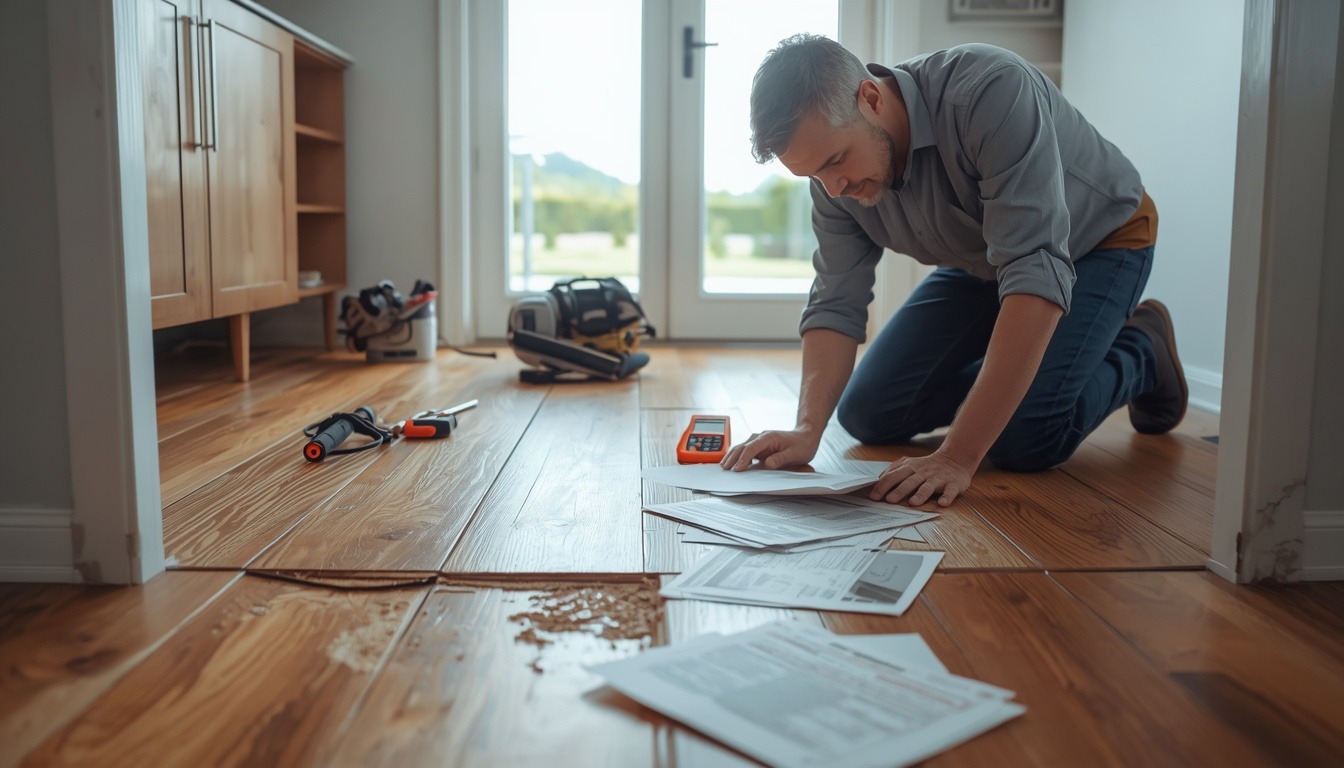
What Is an Installation Error?
An installation error occurs when the flooring product is installed incorrectly, even if the product itself is perfectly manufactured.
In many cases, flooring products leave the factory without any issues. Problems begin only after improper handling, preparation, or installation.
Common Installation Errors
Some of the most common installation mistakes include:
- Poor subfloor preparation
- Incorrect adhesive selection
- Insufficient adhesive coverage
- Improper acclimation of flooring materials
- Incorrect expansion gaps
- Installing over excessive moisture
- Uneven subfloors
- Poor seam installation
- Improper fastening methods
- Failure to follow manufacturer installation guidelines
Even small installation mistakes can eventually lead to major flooring failures.
Note: Because excessive moisture is one of the leading causes of flooring failures, proper testing is a critical part of many inspections. Learn how to check for moisture in concrete floors and why accurate moisture readings are essential before installation.
Signs of Installation Problems
Although every case is different, inspectors often see symptoms such as:
- Loose flooring
- Hollow sounds
- Peaking seams
- Buckling
- Gaps between planks
- Uneven surfaces
- Adhesive failure
- Curling edges
- Cracked tiles caused by poor substrate support
These issues frequently point toward installation-related causes, but they still require proper investigation before reaching a conclusion.
What Is a Manufacturing Defect?
A manufacturing defect occurs when the flooring product itself has a problem before it is installed.
This could result from:
- Poor quality control
- Defective raw materials
- Production errors
- Improper finishing
- Faulty locking systems
- Inconsistent dimensions
- Surface coating failures
Even if installation was completed perfectly, a defective product may still fail.
Fortunately, true manufacturing defects are much less common than installation-related issues.
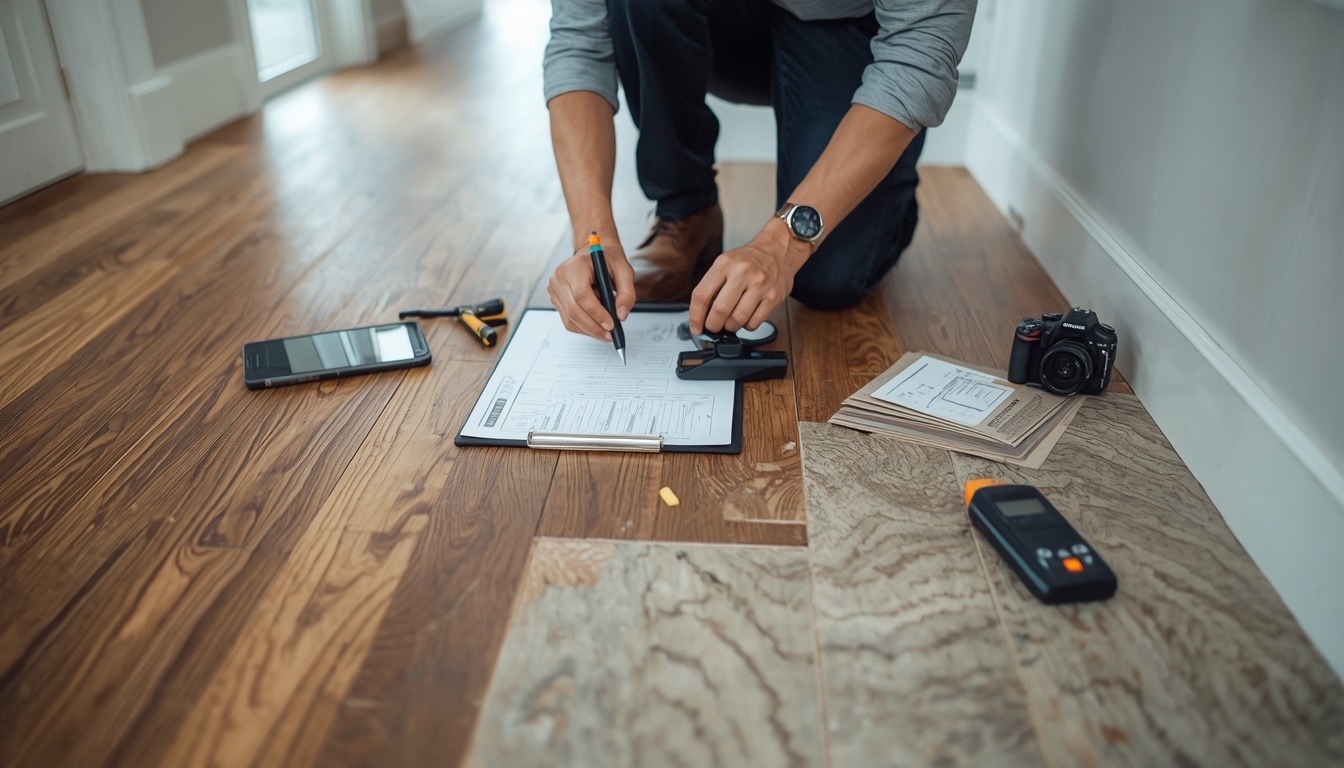
Signs of Manufacturing Defects
Examples may include:
- Delamination
- Finish peeling prematurely
- Defective locking mechanisms
- Surface coating failure
- Incorrect product dimensions
- Material inconsistencies
- Factory bonding failures
A trained flooring inspector carefully evaluates whether these issues originated during manufacturing or occurred after installation.
Related: Learn about the essential tools used by flooring inspectors and how they support accurate flooring failure investigations.
How Flooring Inspectors Begin the Investigation
A flooring inspection starts long before any conclusions are made. Rather than relying on visible damage alone, inspectors collect evidence and evaluate site conditions before identifying the root cause.
Experienced inspectors typically collect information about:
- Flooring type and manufacturer
- Installation date
- Installation method
- Reported symptoms
- Maintenance history
- Environmental conditions
- Previous repairs
- Warranty documentation
This background helps establish a timeline and guides the inspection process. Inspectors then compare field observations with manufacturer installation requirements and applicable industry standards, such as ASTM and ANSI standards, where relevant.
The specific standards referenced depend on the flooring material, installation method, and conditions being evaluated.
Skills Needed to Make Accurate Flooring Failure Determinations
Identifying the true cause of a flooring failure requires more than experience. Flooring inspectors need knowledge of flooring materials, installation methods, moisture testing, industry standards, and inspection techniques to accurately distinguish between installation errors and manufacturing defects.
As flooring products and industry standards continue to evolve, ongoing training helps inspectors stay current and deliver accurate, evidence-based inspections and reports.
For professionals looking to build or expand these skills, IFCII offers hands-on and live instructor-led training designed for both new and experienced flooring inspectors. Training options include:
- Carpet and Hard Surface Inspector Certification – Comprehensive training covering carpet, hardwood, laminate, resilient flooring, inspection procedures, field testing, and report writing.
- Luxury Vinyl Flooring Inspection Course – Specialized training focused on inspecting modern LVT and other luxury vinyl flooring systems.
- NALFA Laminate Flooring Inspection Course – Instruction on laminate flooring performance, inspection techniques, and industry standards.
- Advanced Flooring Inspector Training – Advanced education covering hardwood, ceramic tile, stone, and complex flooring failure investigations.
- Online Report Writing Class – Practical guidance for preparing clear, organized, and defensible flooring inspection reports.
- Flooring Expert Witness Course – Advanced training for experienced inspectors who provide technical opinions in legal, insurance, and construction-related cases.
These programs combine classroom instruction with practical inspection methods, helping inspectors develop the knowledge and confidence needed to identify the root cause of flooring failures accurately.
IFCII provides hands-on flooring inspection training in Gainesville, Georgia, while also offering live instructor-led training through Zoom for professionals who prefer to learn remotely.
Have questions about IFCII’s flooring training programs? Contact us to learn more.
Can Installation Errors and Manufacturing Defects Occur Together?
Yes. In some cases, a flooring failure is caused by a combination of both installation issues and manufacturing defects.
For example:
- A flooring product may have a minor manufacturing defect that becomes a major problem due to excessive moisture exposure.
- The flooring may be installed correctly in most respects, but improper acclimation can worsen an existing product weakness.
- Challenging jobsite conditions may amplify a defect that might not have caused issues under normal circumstances.
Instead of assigning blame based on a single observation, experienced flooring inspectors evaluate all contributing factors to determine the primary cause of the flooring failure.
Determining whether a flooring issue is caused by an installation error or a manufacturing defect requires careful inspection, testing, and evidence-based analysis. Flooring inspectors use their expertise to identify the true cause and provide objective findings for repairs, warranty claims, or legal matters.