
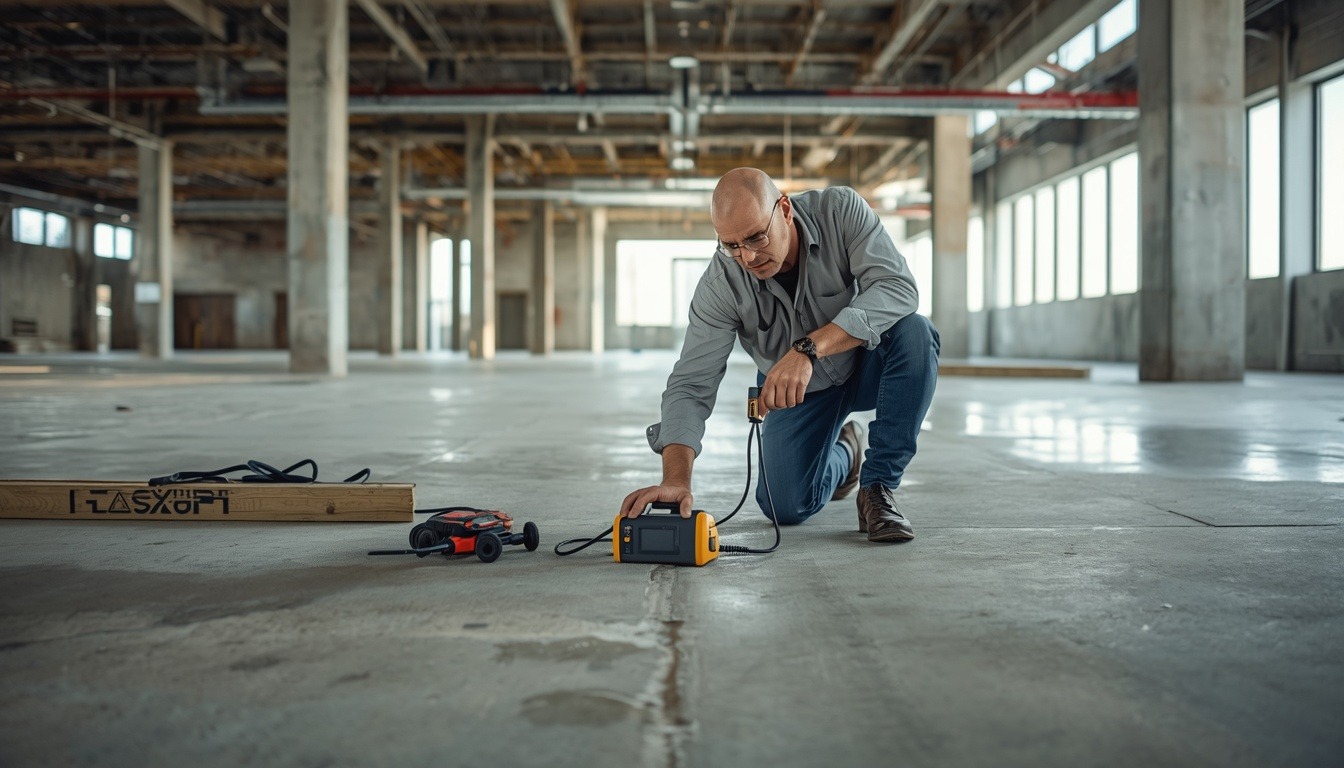
Moisture in a concrete floor can contribute to adhesive failure, warped flooring, mold growth in surrounding materials, and expensive callbacks. For flooring inspectors, installers, and flooring professionals, understanding how to check for moisture in concrete floor conditions is an important part of evaluating slab readiness before installation.
Although the process itself is straightforward, it must be performed correctly. A slab that appears dry on the surface may still contain internal moisture capable of damaging flooring materials after installation. The correct testing method often depends on the flooring type, slab age, site conditions, and the level of accuracy required for the project.
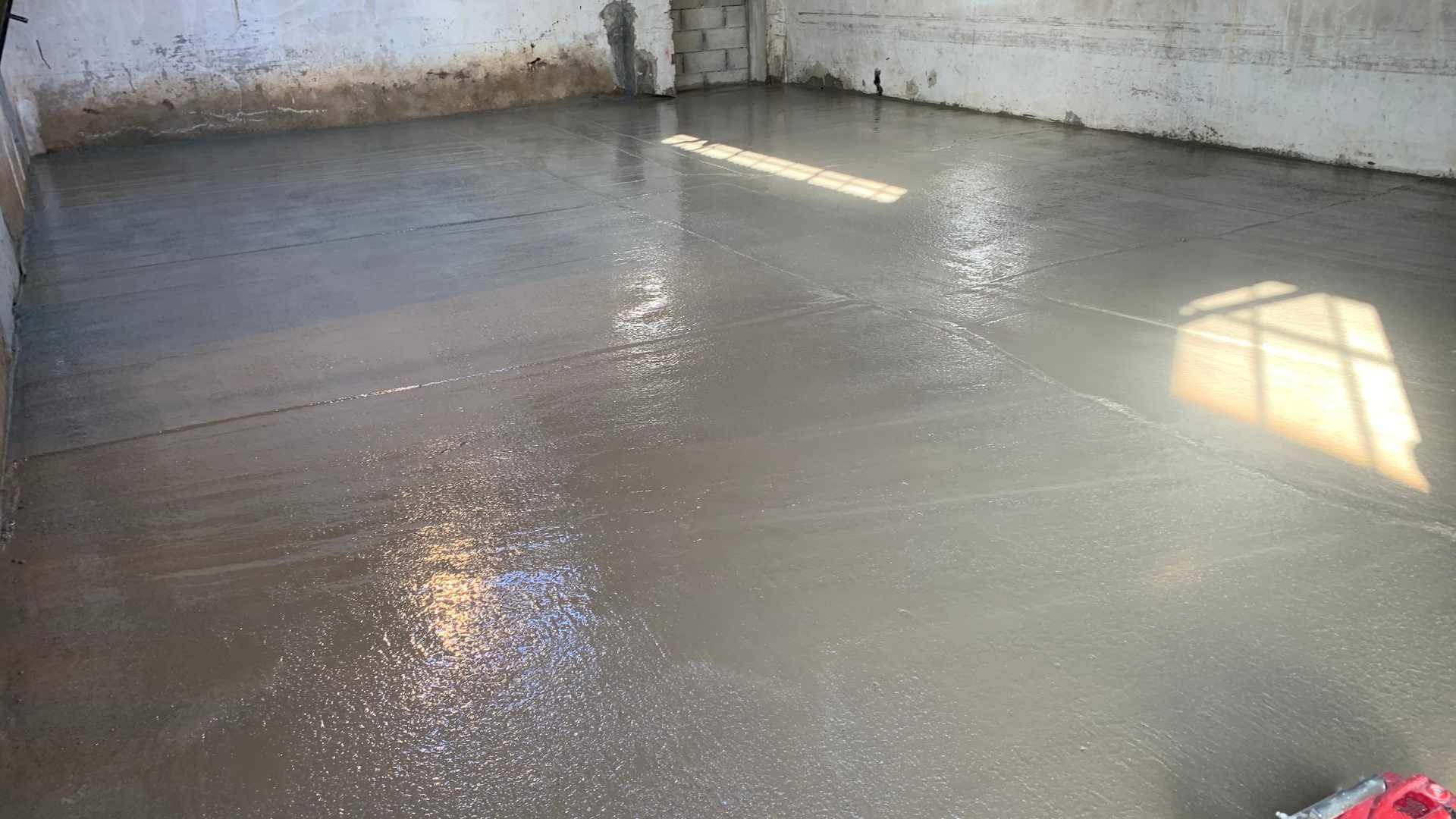
Concrete curing and concrete drying are different processes. A slab may reach structural strength during curing while still retaining excess internal moisture that can affect adhesives, flooring materials, and long-term installation performance.
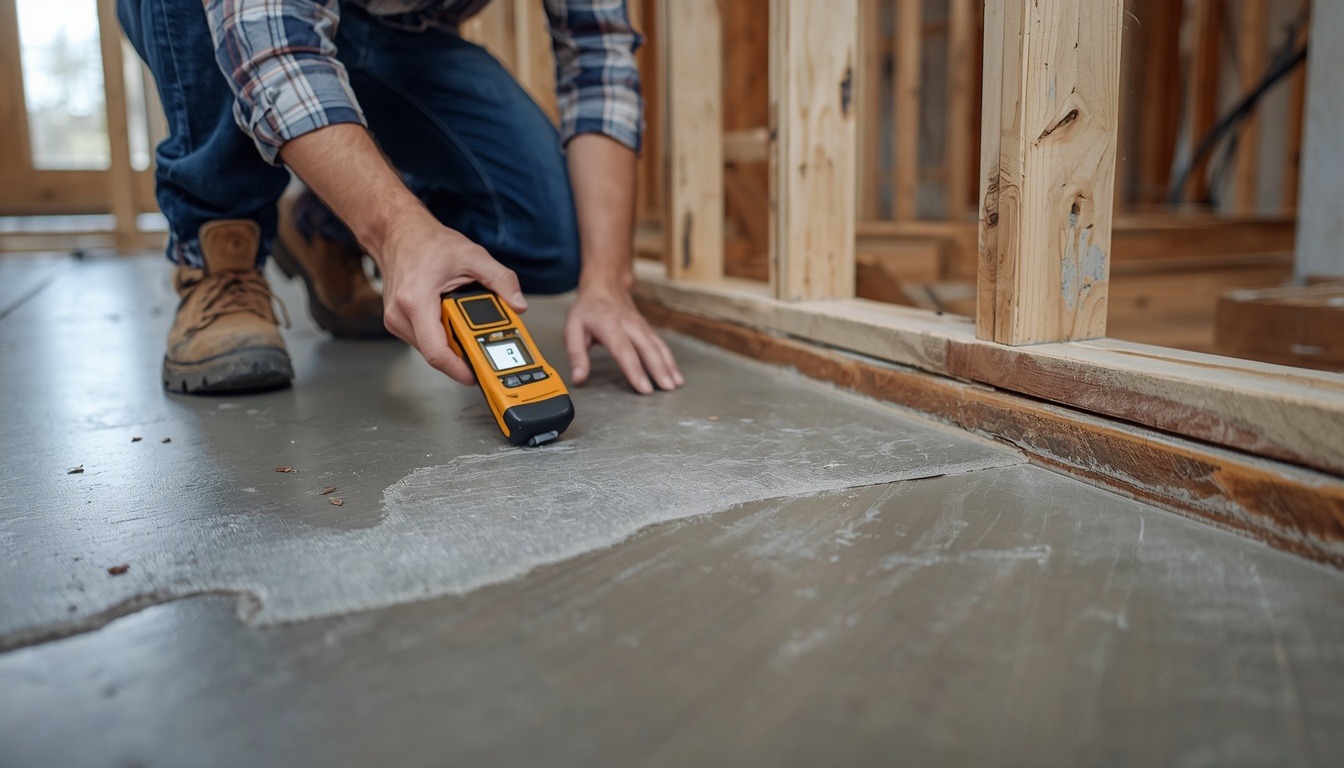
How to Choose the Right Method to Check for Moisture in Concrete Floor
The most reliable approach to checking moisture in a concrete floor is to use more than one testing method when appropriate. Surface appearance alone is not enough because moisture vapor can continue moving upward even when the slab looks dry.
Common concrete moisture testing methods include:
- Plastic sheet test for a quick visual check
- Moisture meter for rapid surface screening
- Calcium chloride test for moisture vapor emission
- Relative humidity (RH) probe test for in-slab moisture conditions
Each method provides different information. Some focus on surface conditions, while others evaluate moisture deeper within the slab. In professional flooring inspections, field observations are often combined with documented testing results for a more accurate evaluation.
1. Start with a visual inspection
Before using moisture testing equipment, inspect the concrete slab for visible warning signs. Dark spots, uneven discoloration, or white powdery residue called efflorescence can indicate moisture movement within the slab.
Inspectors should also check cracks, control joints, and patched areas, as these spots may allow moisture intrusion or vapor transmission. Standing water, signs of past water damage, condensation near walls, or damp odors around slab edges may also point to hidden moisture issues.
While these signs do not always confirm excessive moisture, they are strong indicators that further testing may be needed.
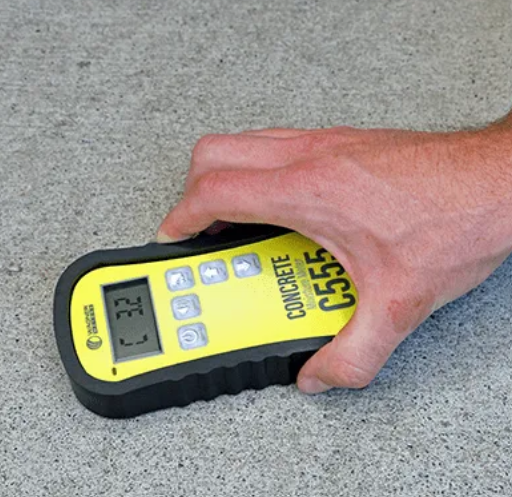
2. Use a moisture meter for a quick screening
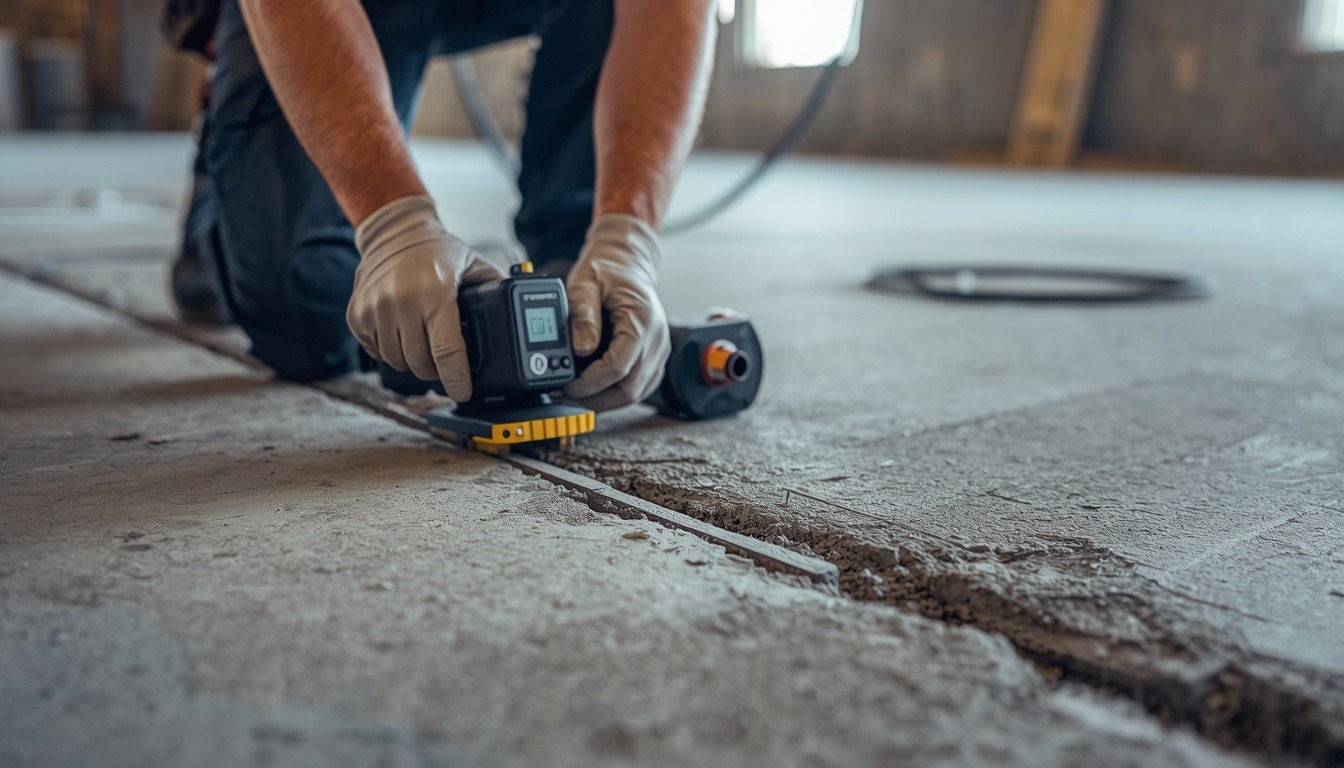
A concrete moisture meter is often used as a quick screening tool to identify potential moisture issues near the slab surface. It helps inspectors compare different areas and locate spots that may need further testing.
However, moisture meter readings should not be used as the only confirmation of slab condition, since factors like concrete density, reinforcement, coatings, and mix design can affect the results.
3. Perform an RH probe test for in-slab moisture
Relative humidity (RH) testing, performed according to ASTM F2170, is widely used to evaluate moisture conditions inside concrete slabs. Unlike surface tests, RH probes measure moisture deeper within the slab, which is important because moisture vapor can rise after flooring installation and cause failures.
RH testing is particularly useful when:
- The slab is new or recently repaired
- Moisture-sensitive flooring materials are being installed
- Documentation is required for manufacturers, warranties, or project records
- A higher level of moisture evaluation is necessary
Flooring manufacturers often provide maximum moisture limits and approved testing methods for their products. Since acceptable moisture levels vary by flooring type and adhesive system, inspectors and installers should always compare test results with the manufacturer’s installation guidelines before installation.
Testing should also be done in proper locations, especially near slab edges, large open areas, or suspected moisture intrusion points. Many manufacturers also require testing under stable building conditions for accurate results.
4. Use the calcium chloride test where appropriate
The calcium chloride test, commonly associated with ASTM F1869, measures the rate of moisture vapor emission from the slab surface over time. It is often used in flooring inspections to evaluate whether moisture vapor emission levels may affect adhesives or flooring materials.
While this method remains widely used, inspectors should understand that it measures surface vapor emission during the test period rather than total internal slab moisture conditions. Because of that limitation, it is often used alongside other testing methods.
Related Articles:
- Essential Tools Used by Flooring Inspectors
- Mistakes New Floor Inspectors Make and How Training Prevents Them
- How to Choose the Best Floor Inspection Certification Course
5. Check the surrounding site conditions
Moisture problems in concrete floors are often caused by surrounding environmental conditions rather than the concrete itself.
During an inspection, professionals should check HVAC operation, indoor humidity, drainage, vapor barriers, groundwater exposure, and possible plumbing leaks. Recent rain, flooding, or excess construction moisture can also raise slab moisture levels.
In many cases, moisture issues are linked to the building environment causing continuous moisture migration. That is why a complete inspection should evaluate both the concrete slab and surrounding site conditions.
Why Flooring Professionals Need Moisture Inspection Training
Because moisture-related flooring failures often involve documentation disputes, many inspectors pursue formal training in testing procedures, reporting standards, and field evaluation methods.
Accurate moisture testing is an important part of modern flooring inspections, especially when evaluating concrete slabs before installation. Flooring inspectors and professionals handling moisture-related claims often need practical knowledge of testing procedures, site evaluation, documentation, and report writing.
Organizations such as IFCII provide hands-on flooring inspection training and certification programs covering carpet, laminate, hardwood, luxury vinyl, and hard surface flooring systems. Training includes inspection procedures, field testing methods, moisture-related flooring issues, and professional report preparation used in real inspection work.
Courses such as the Carpet and Hard Surface Inspector Certification can help flooring professionals, inspectors, installers, and claims personnel strengthen their technical inspection knowledge.
Note: Upcoming IFCII Carpet and Hard Surface Inspector Training is scheduled for June 15–18, 2026, from 8:00 am to 5:00 pm. Students can choose to attend either in person in Gainesville, Georgia, or through the virtual training option.
Common signs that concrete may still be too wet for flooring
Before flooring installation begins, watch for these common warning signs of excess moisture in the concrete slab:
| Warning Sign | What It May Indicate |
|---|---|
| Adhesive does not bond properly | Excess moisture is interfering with adhesive performance |
| Flooring edges curl or bubble | Moisture vapor pressure affects the flooring material |
| Vinyl or laminate shows surface defects | Moisture-related expansion or substrate movement |
| Tile grout discoloration appears | Water migration through the concrete slab |
| Hardwood begins cupping or expanding | Elevated moisture affecting wood stability |
| Efflorescence returns after cleaning | Ongoing moisture movement within the concrete |
These symptoms often appear after a moisture problem has already existed for some time. By the time visible flooring damage develops, the slab may have been releasing excess moisture for weeks or even months.
Steps to Document the Test Properly
Good moisture testing involves more than simply taking a reading. Flooring inspectors should also document the conditions that may affect the results.
Important documentation may include:
- Date and time
- Test location
- Slab age
- Indoor temperature and humidity
- Test method used
- Product or tool model
- Reading values
- Visible slab conditions
- Any unusual site factors
Clear documentation helps installers, manufacturers, property owners, and claims personnel understand the slab condition before flooring installation begins.
FAQs
1. How do I know if concrete is wet enough to cause flooring failure?
If the slab shows elevated moisture readings, visible dampness, efflorescence, or recurring adhesive problems, it may contain enough moisture to affect flooring performance.
2. Can I rely on a moisture meter alone?
No. Moisture meters are useful for screening and identifying suspicious areas, but they do not always provide a complete picture of internal slab moisture conditions.
3. How long should concrete dry before testing?
Drying time depends on slab thickness, mix design, ventilation, humidity, and environmental conditions. Surface appearance alone is not enough to determine readiness.
4. Should a flooring inspector prepare a written report after testing?
Yes. Proper documentation helps record testing methods, readings, site conditions, and inspection findings. Professional inspection training programs often place significant emphasis on report-writing procedures because they are an important part of flooring inspections.
5. Can concrete pass one moisture test and fail another?
Yes. Different testing methods evaluate moisture in different ways. Surface-based tests and in-slab RH testing may produce different results depending on slab conditions, drying rates, and environmental factors.